
![Overseerr (container)]() Overseerr (container)
Overseerr (container)
Overseerr is a request management and media discovery tool built to work with your existing Plex ecosystem.
Configuration
TypeContainerlscr.io/linuxserver/overseerr:latest5055/tcp/config : /opt/mediadepot/apps/overseerr/etc/localtime : /etc/localtimePGID=15000PUID=15000TZ=America/Los_Angelestraefik.enable=truetraefik.http.services.overseerr.loadbalancer.server.port=5055traefik.http.routers.overseerr.entrypoints=websecuretraefik.http.routers.overseerr.tls.certresolver=mydnschallengeTemplate by mediadepot
Report issueStandalone Install
Select an install method, to see config/commands for deploying Overseerr (container)
Install on Portainer
Import all app templates into your Portainer instance, for easy 1-click deploys
- Ensure both Docker and Portainer are installed, and up-to-date
- Log into your Portainer web UI
- Under Settings → App Templates, paste the below URL
- Head to Home → App Templates, and the list of apps will show up
- Select Overseerr (container), fill in any config options, and hit Deploy
Template Import URL
https://raw.githubusercontent.com/Lissy93/portainer-templates/main/templates.json
Show Me
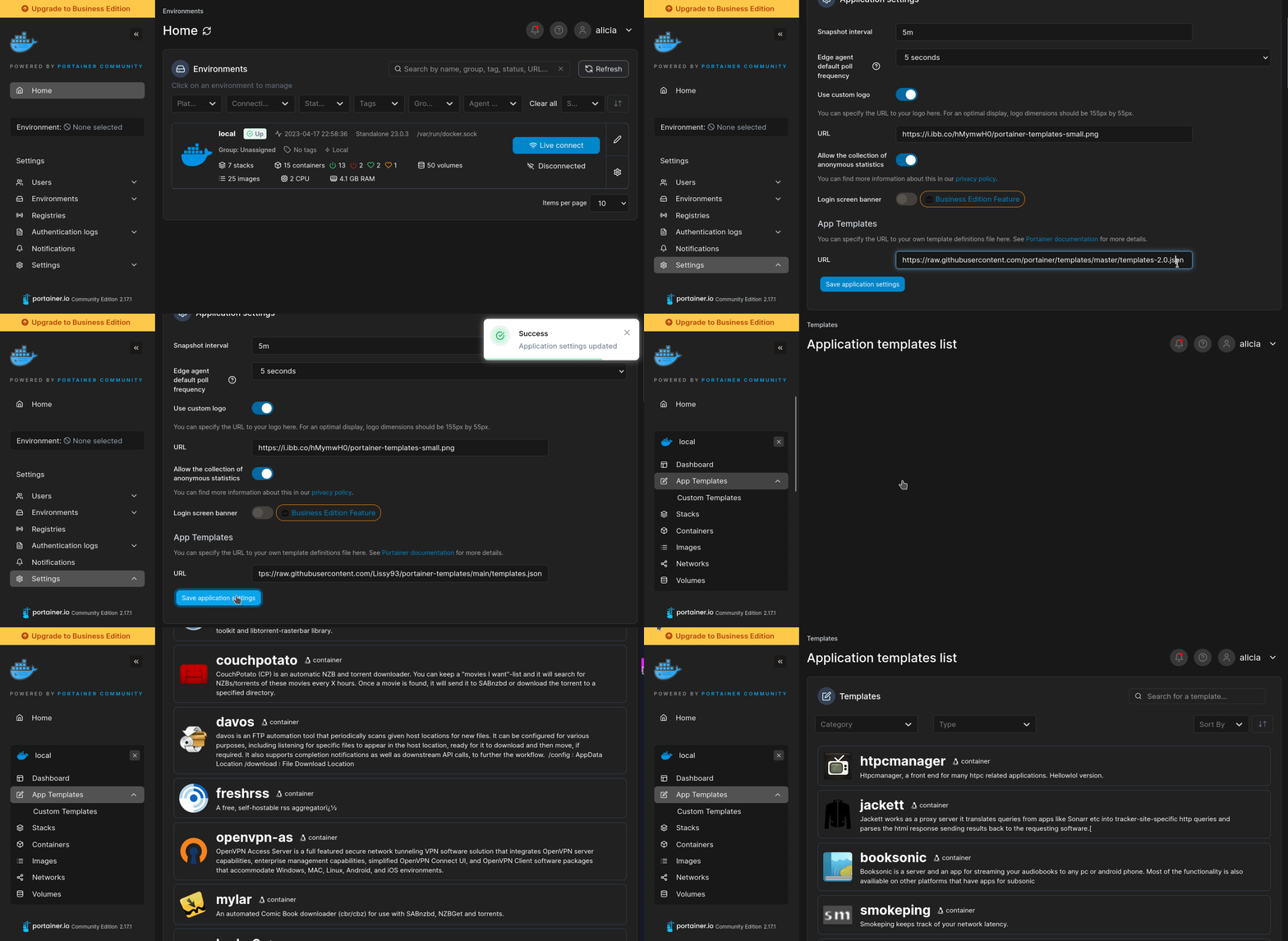
More install options in our documentation.
Serve Overseerr (container) on your own domain behind Caddy, Nginx or Traefik. Fill in your domain and copy the result. It's a starting point, some apps need their own base URL or extra headers set too.
Proxying overseerr-container.example.com to http://overseerr:5055
Add this to your Caddyfile
overseerr-container.example.com {
	reverse_proxy http://overseerr:5055
}Check the logs first
Nine times out of ten the logs tell you exactly what went wrong.
- In Portainer, go to Containers, click the container, then Logs. Or run
docker logs overseerr - Exit codes help too:
137means killed, usually out of memory.126or127means the command inside the image is broken.
Published on a random port
This template exposes 5055/tcp without setting a host port,
so Docker picks a random free one on every deploy.
- Find it in the Ports column of Portainer's container list, or with
docker port overseerr
Permission denied on volumes
If the logs show "permission denied", the app can't write to its data folder on the host.
- Fix the ownership:
sudo chown -R 15000:15000 /opt/mediadepot/apps/overseerr - Or set the
PUIDandPGIDvariables (defaults 15000:15000) to match your own user, found withid $USER - Seeing "read-only file system"?
/etc/localtimeis mounted read-only on purpose, the app isn't meant to write there.
Image won't pull
Test the pull directly on the host: docker pull lscr.io/linuxserver/overseerr:latest
- "manifest unknown" means the tag no longer exists. This template uses
latest, so try pinning a specific version instead. - "toomanyrequests" is the Docker Hub rate limit. Log in with
docker loginto raise it. - "no space left on device" means a full disk. Reclaim space with
docker system prune
"exec format error"
This means the image was built for a different CPU architecture than your server.
- Check yours with
uname -m: x86_64 is amd64, aarch64 is arm64. Raspberry Pi and other ARM boards are the usual culprits.
Raise an issue
Found something which isn't working as it should? Here's how to report it.
- Bug within the app: Open an issue within overseerr's repo
- Template not working: Open an issue on mediadepot/templates
- This website not working: Open an issue on lissy93/portainer-templates
A single container
Overseerr (container) runs as one container, the simplest kind of app here. Just the one image to pull and nothing else wired up alongside it.
The app image
An image is the app packed up ready to go, everything Overseerr (container) needs bundled into one download. This template pulls lscr.io/linuxserver/overseerr:latest, which Docker fetches once and then starts your own copy from.
Where the image comes from
Docker pulls its images from registries, public libraries of ready-built apps. Overseerr (container)'s comes from LinuxServer's registry, published by linuxserver.
Version tags
The bit after the colon in the image name is the version tag. Here it's latest, which always points at the newest build, so a redeploy can bump you to a newer release without you asking. Pin a specific tag if you would rather stay on one version.
Ports
A port is the door the app answers on. Here the app exposes a port but leaves the host side blank, so Docker picks a free one for you. It opens:
5055, published on a random host port
Volumes
A volume is where Overseerr (container) keeps its files so they survive an update or a restart. Without one, anything it saves would sit inside the container and vanish the moment it's recreated. This template mounts:
/configfrom/opt/mediadepot/apps/overseerron the host/etc/localtimefrom/etc/localtimeon the host, read-only
Environment variables
Environment variables are the settings you hand over when you deploy, things like a password or a timezone. Overseerr (container) takes 3 of them, all with defaults you can leave alone or tweak:
PGID, defaults to15000PUID, defaults to15000TZ, defaults toAmerica/Los_Angeles
Users and permissions
The PUID and PGID settings tell it which user and group to act as on your host. Point them at your own account (find yours with id $USER) so the files it writes into your mounted folders come out owned by you rather than root.
Networking
Nothing custom is set, so Overseerr (container) sits on Docker's default bridge network: its own private space that reaches the outside world only through the ports it publishes.
Container name
Once it's deployed, Portainer names the container overseerr. That's what you'll spot in the containers list and use in commands like docker logs overseerr.
Labels
Labels are small notes pinned to the container. They don't change how Overseerr (container) behaves, but other tools read them, most often a reverse proxy like Traefik working out which apps to route where. This template sets:
traefik.enable=truetraefik.http.services.overseerr.loadbalancer.server.port=5055traefik.http.routers.overseerr.entrypoints=websecuretraefik.http.routers.overseerr.tls.certresolver=mydnschallenge
Portainer app templates
Zooming out, this whole page comes from a Portainer app template: a short recipe telling Portainer how to set Overseerr (container) up. Add the template list to Portainer once, then deploying Overseerr (container) is a click rather than a wall of config.