
![ArchiSteamFarm]() ArchiSteamFarm
ArchiSteamFarm
Container
C# application with primary purpose of farming Steam cards from multiple accounts simultaneously.
Source: https://github.com/JustArchiNET/ArchiSteamFarm
Image details
Source details
Configuration
TypeContainerlinuxjustarchi/archisteamfarm:latest1242:1242/tcp/app/config : /portainer/Files/AppData/Config/ArchiSteamFarm/config/app/plugins : /portainer/Files/AppData/Config/ArchiSteamFarm/plugins/app/logs : /portainer/Files/AppData/Config/ArchiSteamFarm/logsPUID=1000PGID=1000unless-stoppedTemplate by novaspirit
Report issueNotes
Check our Github page: https://github.com/pi-hosted/pi-hosted
Official Webpage: https://github.com/JustArchiNET/ArchiSteamFarm/
Official Docker Documentation: https://github.com/JustArchiNET/ArchiSteamFarm/wiki/Docker/
Standalone Install
Select an install method, to see config/commands for deploying ArchiSteamFarm
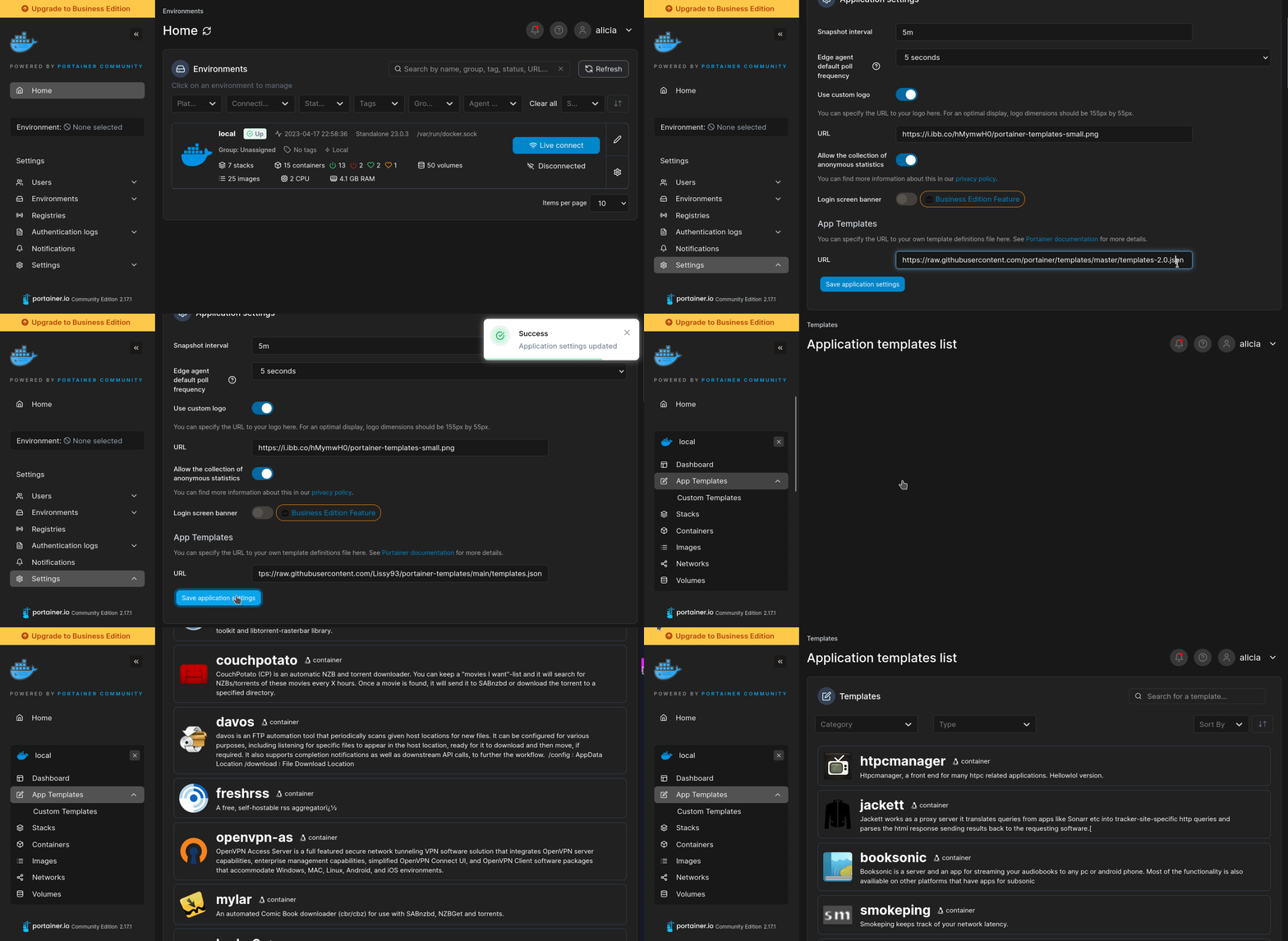
Install on Portainer
Import all app templates into your Portainer instance, for easy 1-click deploys
- Ensure both Docker and Portainer are installed, and up-to-date
- Log into your Portainer web UI
- Under Settings → App Templates, paste the below URL
- Head to Home → App Templates, and the list of apps will show up
- Select ArchiSteamFarm, fill in any config options, and hit Deploy
Template Import URL
https://raw.githubusercontent.com/Lissy93/portainer-templates/main/templates.json
Show Me
More install options in our documentation, or see JustArchiNET/ArchiSteamFarm for app-specific guidance.

ArchiSteamFarm

















Donate








Description
ASF is a C# application with primary purpose of farming Steam cards from multiple accounts simultaneously. Unlike Idle Master which works only for one account at given time, while requiring Steam client running in the background and launching additional processes imitating "game playing" status, ASF doesn't require any Steam client running in the background, doesn't launch any additional processes and is made to handle unlimited Steam accounts at once. In addition to that, it's meant to be run on servers or other desktop-less machines, and features full cross-OS support, which makes it possible to launch on any operating system with .NET Core runtime, such as Windows, Linux and macOS. ASF is possible thanks to gigantic amount of work done in marvelous SteamKit2 library.Today, ASF is one of the most versatile Steam power tools, allowing you to make use of many features that were implemented over time. Apart from farming Steam cards, which remains the primary focus, ASF includes bunch of features on its own, such as a possibility to use it as Steam authenticator or chat logger. In addition to that, ASF includes plugin system, thanks to which anybody can further extend it to their needs.
Core features
- Automatic farming of available games with card drops using any number of active accounts
- No requirement of running or even having official Steam client installed
- Guarantee of being VAC-free, focus on security and privacy
- Complex error-reporting mechanism, reliability even during Steam issues and other networking quirks
- Flexible cards farming algorithm, pushing the performance to the maximum while still allowing a lot of customization
- Offline farming, enabling you to skip in-game status and stop confusing your friends with fake playing status
- Advanced support for Steam accounts, including ability to redeem keys, redeem gifts, accept trades, send messages and more
- Support for latest Steam security features, including SteamGuard, SteamParental and 2-factor authentication
- Unique ASF 2FA mechanism allowing ASF to act as a mobile authenticator, if needed
- STM-like integration for trades, both passive (accepting) and active (sending), ASF can help you complete your sets
- Special plugin system, which allows you to extend ASF in any way you wish through your own code
- Powered by .NET Core, cross-OS compatibility, official support for Windows, Linux and macOS
- ...and many more!
For learning about even more ASF features, we recommend starting with our FAQ entry.
Setting up / Help
Detailed guide regarding setting up and using ASF is available on our wiki in setting up section. It's user-friendly guide that shows basic, as well as a bit more complex ASF setup, covering all the required dependencies and other steps that are required in order to start using ASF software.Compatibility / Supported operating systems
ASF officially supports Windows, Linux and macOS operating systems, but it can work anywhere where you can obtain working .NET Core runtime. Please visit compatibility section on the wiki for more information regarding environments that ASF can work in.Want to know more?
Our wiki includes a lot of other articles that will tell you about everything in regards to ASF, as well as show you other features that you can make use of. If you have some time to spare and you'd like to find out what else ASF can do for you, we heavily encourage you to take a look!Serve ArchiSteamFarm on your own domain behind Caddy, Nginx or Traefik. Fill in your domain and copy the result. It's a starting point, some apps need their own base URL or extra headers set too.
Proxying archisteamfarm.example.com to http://archisteamfarm:1242
Add this to your Caddyfile
archisteamfarm.example.com {
	reverse_proxy http://archisteamfarm:1242
}Check the logs first
Nine times out of ten the logs tell you exactly what went wrong.
- In Portainer, go to Containers, click the container, then Logs. Or run
docker logs archisteamfarm - Exit codes help too:
137means killed, usually out of memory.126or127means the command inside the image is broken.
Port already in use
If deployment fails with "Bind for 0.0.0.0:1242 failed: port is already allocated", something else on your server is using that port.
- Find what's using it:
sudo ss -tlnp | grep :1242 - Stop the other service, or pick a different host port. In
1242:1242only the left number is yours to change, the right one belongs to the app.
Running but the page won't load
The container is up but nothing appears in your browser.
- Use your server's real IP:
http://your-server-ip:1242. The 0.0.0.0 link Portainer shows isn't a real address. - Give it a minute after first deploy, archisteamfarm can take a while to initialise.
- Make sure your firewall allows the port, e.g.
sudo ufw allow 1242
Permission denied on volumes
If the logs show "permission denied", the app can't write to its data folder on the host.
- Fix the ownership:
sudo chown -R 1000:1000 /portainer/Files/AppData/Config/ArchiSteamFarm/config(and the same for the other mapped folders) - Or set the
PUIDandPGIDvariables (defaults 1000:1000) to match your own user, found withid $USER
Image won't pull
Test the pull directly on the host: docker pull justarchi/archisteamfarm:latest
- "manifest unknown" means the tag no longer exists. This template uses
latest, so try pinning a specific version instead. - "toomanyrequests" is the Docker Hub rate limit. Log in with
docker loginto raise it. - "no space left on device" means a full disk. Reclaim space with
docker system prune
"exec format error"
This means the image was built for a different CPU architecture than your server.
- This image supports:
amd64, arm64, arm/v7 - Check yours with
uname -m: x86_64 is amd64, aarch64 is arm64. Raspberry Pi and other ARM boards are the usual culprits.
Container keeps restarting
The unless-stopped restart policy relaunches the app after every crash, so the real error can scroll past.
- Check the logs right after a restart, the last few lines before it died are the useful ones.
- Get the exit code with
docker inspect archisteamfarm --format '{{.State.ExitCode}}' - Still stuck? Redeploy once with the restart policy set to
noso the failure stays visible.
Raise an issue
Found something which isn't working as it should? Here's how to report it.
- Bug within the app: Open an issue on JustArchiNET/ArchiSteamFarm
- Template not working: Open an issue on novaspirit/pi-hosted
- This website not working: Open an issue on lissy93/portainer-templates
A single container
ArchiSteamFarm runs as one container, the simplest kind of app here. Just the one image to pull and nothing else wired up alongside it.
The app image
An image is the app packed up ready to go, everything ArchiSteamFarm needs bundled into one download. This template pulls justarchi/archisteamfarm:latest, which Docker fetches once (about 108 MB) and then starts your own copy from.
Where the image comes from
Docker pulls its images from registries, public libraries of ready-built apps. ArchiSteamFarm's comes from Docker Hub, published by justarchi.
Version tags
The bit after the colon in the image name is the version tag. Here it's latest, which always points at the newest build, so a redeploy can bump you to a newer release without you asking. Newest right now is 6.3.10.3. Pin a specific tag if you would rather stay on one version.
Which machines it runs on
Every image is built for particular CPU types. This one ships for amd64, arm64, arm/v7, so it runs on both regular x86 servers and ARM boards like a Raspberry Pi.
Ports
A port is the door the app answers on. A mapping like 1242:1242 means it's reachable on port 1242 of your server, where the left number is yours to change and the right one belongs to the app. It opens:
1242:1242
Volumes
A volume is where ArchiSteamFarm keeps its files so they survive an update or a restart. Without one, anything it saves would sit inside the container and vanish the moment it's recreated. This template mounts:
/app/configfrom/portainer/Files/AppData/Config/ArchiSteamFarm/configon the host/app/pluginsfrom/portainer/Files/AppData/Config/ArchiSteamFarm/pluginson the host/app/logsfrom/portainer/Files/AppData/Config/ArchiSteamFarm/logson the host
Environment variables
Environment variables are the settings you hand over when you deploy, things like a password or a timezone. ArchiSteamFarm takes 2 of them, all with defaults you can leave alone or tweak:
PUID, defaults to1000PGID, defaults to1000
Restart policy
The restart policy here is unless-stopped, so Docker restarts ArchiSteamFarm after a crash or reboot, but leaves it off when you stop it on purpose. You can change this on the deploy screen. The choices are no (never restart), on-failure (only after a crash), unless-stopped (restart unless you stop it), and always (bring it back no matter what).
Users and permissions
The PUID and PGID settings tell it which user and group to act as on your host. Point them at your own account (find yours with id $USER) so the files it writes into your mounted folders come out owned by you rather than root.
Networking
Nothing custom is set, so ArchiSteamFarm sits on Docker's default bridge network: its own private space that reaches the outside world only through the ports it publishes.
Container name
Once it's deployed, Portainer names the container archisteamfarm. That's what you'll spot in the containers list and use in commands like docker logs archisteamfarm.
Platform
The platform is linux, the kind of system the container is built to run on. Docker and Portainer handle this on a normal Linux server.
Open source license
ArchiSteamFarm is open source, released under the Apache-2.0 license. In plain terms the code is out in the open, so you're free to run it and change it to fit what you need.
Portainer app templates
Zooming out, this whole page comes from a Portainer app template: a short recipe telling Portainer how to set ArchiSteamFarm up. Add the template list to Portainer once, then deploying ArchiSteamFarm is a click rather than a wall of config.