
![GlitchTip]() GlitchTip
GlitchTip
Stack
GlitchTip, open-source, Sentry-API-compatible error tracking (point any Sentry SDK at its DSN) at a fraction of self-hosted Sentry's footprint.
Configuration
TypeComposelinuxGLITCHTIP_DOMAIN=http://localhost:5000SECRET_KEY=''Template by deployable-sh·Source
Report issueServices
web
Configuration
Imageglitchtip/glitchtip:6.2.25000:5000DATABASE_URL=postgres://glitchtip:glitchtip-local-only@db:5432/glitchtipREDIS_URL=redis://queue:6379/0SECRET_KEY=${SECRET_KEY}EMAIL_URL=consolemail://GLITCHTIP_DOMAIN=${GLITCHTIP_DOMAIN:-http://localhost:5000}ENABLE_OPEN_USER_REGISTRATION=falseCELERY_WORKER_AUTOSCALE=1,3PORT=5000unless-stoppedImage details
worker
Configuration
Imageglitchtip/glitchtip:6.2.2./bin/run-celery-with-beat.shDATABASE_URL=postgres://glitchtip:glitchtip-local-only@db:5432/glitchtipREDIS_URL=redis://queue:6379/0SECRET_KEY=${SECRET_KEY}EMAIL_URL=consolemail://GLITCHTIP_DOMAIN=${GLITCHTIP_DOMAIN:-http://localhost:5000}ENABLE_OPEN_USER_REGISTRATION=falseCELERY_WORKER_AUTOSCALE=1,3unless-stoppedImage details
migrate
Configuration
Imageglitchtip/glitchtip:6.2.2bash,-c,./manage.py migrate && sleep infinityDATABASE_URL=postgres://glitchtip:glitchtip-local-only@db:5432/glitchtipREDIS_URL=redis://queue:6379/0SECRET_KEY=${SECRET_KEY}EMAIL_URL=consolemail://GLITCHTIP_DOMAIN=${GLITCHTIP_DOMAIN:-http://localhost:5000}ENABLE_OPEN_USER_REGISTRATION=falseCELERY_WORKER_AUTOSCALE=1,3unless-stoppedImage details
db
Configuration
Imagepostgres:17/var/lib/postgresql/data : dbdataPOSTGRES_USER=glitchtipPOSTGRES_PASSWORD=glitchtip-local-onlyPOSTGRES_DB=glitchtipunless-stoppedImage details
queue
Configuration
Imagevalkey/valkey:7.2unless-stoppedImage details
Standalone Install
Select an install method, to see config/commands for deploying GlitchTip
Install on Portainer
Import all app templates into your Portainer instance, for easy 1-click deploys
- Ensure both Docker and Portainer are installed, and up-to-date
- Log into your Portainer web UI
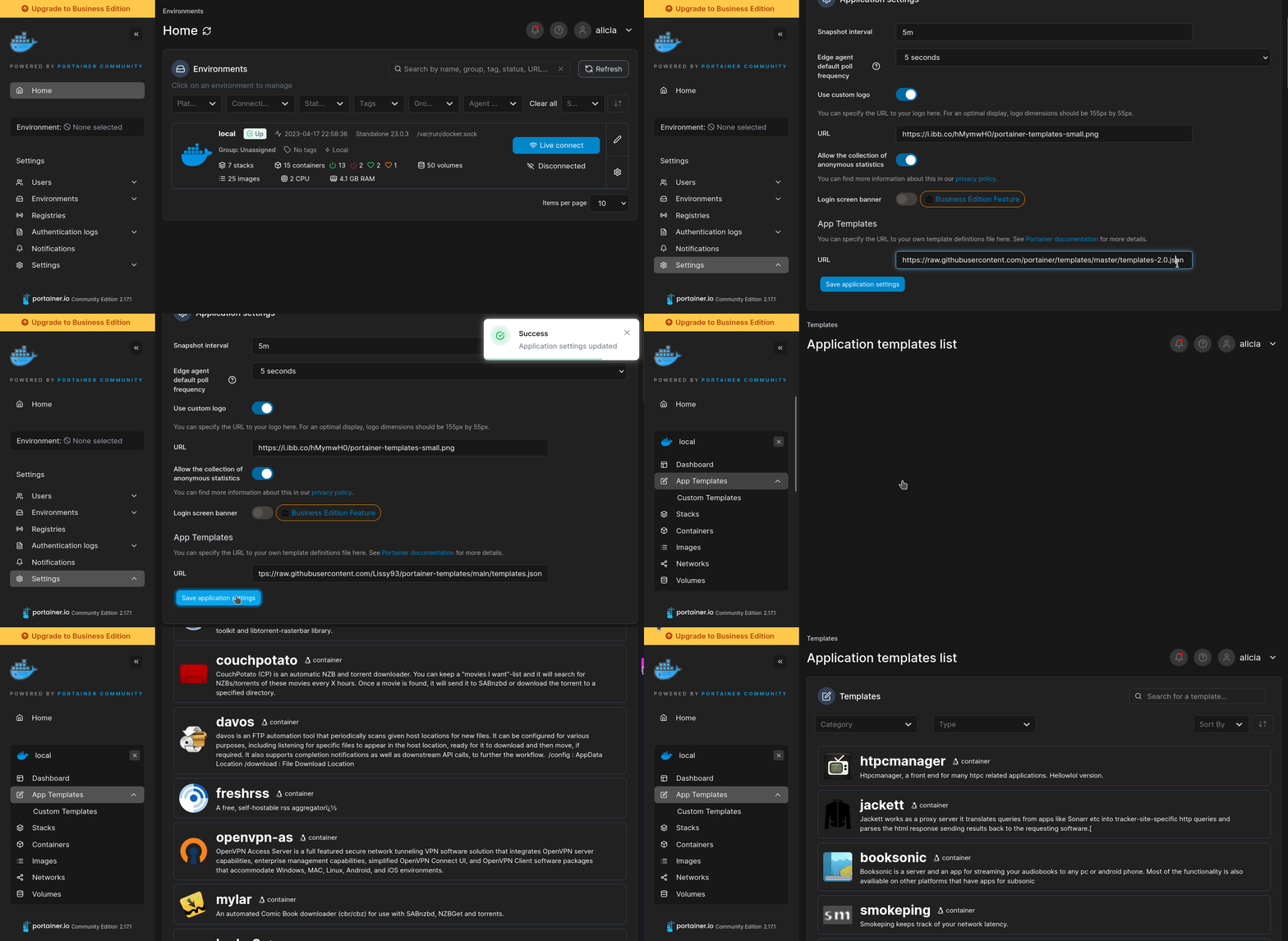
- Under Settings → App Templates, paste the below URL
- Head to Home → App Templates, and the list of apps will show up
- Select GlitchTip, fill in any config options, and hit Deploy
Template Import URL
https://raw.githubusercontent.com/Lissy93/portainer-templates/main/templates.json
Show Me
Original stackfile
The compose file this template deploys, straight from its repo:
name: glitchtip

x-glitchtip: &glitchtip
  image: glitchtip/glitchtip:6.2.2
  restart: unless-stopped

x-glitchtip-env: &glitchtip-env
  DATABASE_URL: postgres://glitchtip:glitchtip-local-only@db:5432/glitchtip
  REDIS_URL: redis://queue:6379/0
  SECRET_KEY: ${SECRET_KEY}
  EMAIL_URL: consolemail://
  GLITCHTIP_DOMAIN: ${GLITCHTIP_DOMAIN:-http://localhost:5000}
  ENABLE_OPEN_USER_REGISTRATION: "false"
  CELERY_WORKER_AUTOSCALE: "1,3"

services:
  web:
    <<: *glitchtip
    environment:
      <<: *glitchtip-env
      PORT: "5000"
    ports:
      - "5000:5000"
    depends_on:
      - db
      - queue

  worker:
    <<: *glitchtip
    command:
      - ./bin/run-celery-with-beat.sh
    environment: *glitchtip-env
    depends_on:
      - db
      - queue

  migrate:
    <<: *glitchtip
    command:
      - bash
      - -c
      - ./manage.py migrate && sleep infinity
    environment: *glitchtip-env
    depends_on:
      - db

  db:
    image: postgres:17
    restart: unless-stopped
    environment:
      POSTGRES_USER: glitchtip
      POSTGRES_PASSWORD: glitchtip-local-only
      POSTGRES_DB: glitchtip
    volumes:
      - dbdata:/var/lib/postgresql/data

  queue:
    image: valkey/valkey:7.2
    restart: unless-stopped

volumes:
  dbdata:
Or deploy it directly from the source:
git clone https://github.com/deployable-sh/stacks
cd stacks
docker compose -f glitchtip/compose.yaml up -d
More install options in our documentation.
Container Documentation
web Documentation
Open source application monitoring. Sentry-compatible error collection, uptime, and performance.
worker Documentation
Open source application monitoring. Sentry-compatible error collection, uptime, and performance.
migrate Documentation
Open source application monitoring. Sentry-compatible error collection, uptime, and performance.
db Documentation
The PostgreSQL object-relational database system provides reliability and data integrity.
queue Documentation
Valkey is a high-performance data structure server that primarily serves key/value workloads.
Serve GlitchTip on your own domain behind Caddy, Nginx or Traefik. Fill in your domain and copy the result. It's a starting point, some apps need their own base URL or extra headers set too.
Proxying glitchtip.example.com to http://web:5000
Add this to your Caddyfile
glitchtip.example.com {
	reverse_proxy http://web:5000
}Check the logs first
Nine times out of ten the logs tell you exactly what went wrong.
- In Portainer, go to Containers, click the container, then Logs. Or run
docker logs <container> - Exit codes help too:
137means killed, usually out of memory.126or127means the command inside the image is broken.
Port already in use
If deployment fails with "Bind for 0.0.0.0:5000 failed: port is already allocated", something else on your server is using that port.
- Find what's using it:
sudo ss -tlnp | grep :5000 - Stop the other service, or pick a different host port. In
5000:5000only the left number is yours to change, the right one belongs to the app.
Running but the page won't load
The container is up but nothing appears in your browser.
- Use your server's real IP:
http://your-server-ip:5000. The 0.0.0.0 link Portainer shows isn't a real address. - Give it a minute after first deploy, glitchtip can take a while to initialise.
- Make sure your firewall allows the port, e.g.
sudo ufw allow 5000
Image won't pull
Test the pull directly on the host: docker pull glitchtip/glitchtip:6.2.2
- "manifest unknown" means the tag no longer exists.
- "toomanyrequests" is the Docker Hub rate limit. Log in with
docker loginto raise it. - "no space left on device" means a full disk. Reclaim space with
docker system prune
"exec format error"
This means the image was built for a different CPU architecture than your server.
- Check yours with
uname -m: x86_64 is amd64, aarch64 is arm64. Raspberry Pi and other ARM boards are the usual culprits.
Container keeps restarting
The unless-stopped restart policy relaunches the app after every crash, so the real error can scroll past.
- Check the logs right after a restart, the last few lines before it died are the useful ones.
- Get the exit code with
docker inspect <container> --format '{{.State.ExitCode}}' - Still stuck? Redeploy once with the restart policy set to
noso the failure stays visible.
Stack won't deploy
Compose stacks fail fast on small mistakes, and Portainer shows the reason just above the editor.
- YAML only accepts spaces for indentation, a single tab breaks the whole file.
Raise an issue
Found something which isn't working as it should? Here's how to report it.
- Bug within the app: Open an issue within glitchtip's repo
- Template not working: Open an issue on deployable-sh/stacks
- This website not working: Open an issue on lissy93/portainer-templates
A Compose stack
GlitchTip is a Compose stack, a set of containers (5 of them) defined in one file and brought up together by Portainer, then started and stopped as a single app.
The services
This stack is built from 5 containers that run side by side. Here's each one, with the image it runs and anything it waits for first:
webrunsglitchtip/glitchtip:6.2.2, starts after db, queueworkerrunsglitchtip/glitchtip:6.2.2, starts after db, queuemigraterunsglitchtip/glitchtip:6.2.2, starts after dbdbrunspostgres:17queuerunsvalkey/valkey:7.2
Ports
A port is the door the app answers on. A mapping like 5000:5000 means it's reachable on port 5000 of your server, where the left number is yours to change and the right one belongs to the app. It opens:
5000:5000
Volumes
A volume is where GlitchTip keeps its files so they survive an update or a restart. Without one, anything it saves would sit inside the container and vanish the moment it's recreated. This template mounts:
/var/lib/postgresql/datakept in thedbdatavolume Docker manages
Environment variables
Environment variables are the settings you hand over when you deploy, things like a password or a timezone. GlitchTip takes 11 of them, all with defaults you can leave alone or tweak:
DATABASE_URL, defaults topostgres://glitchtip:glitchtip-local-only@db:5432/glitchtipREDIS_URL, defaults toredis://queue:6379/0SECRET_KEY, pulled from your own environmentEMAIL_URL, defaults toconsolemail://GLITCHTIP_DOMAIN, defaults tohttp://localhost:5000ENABLE_OPEN_USER_REGISTRATION, defaults tofalseCELERY_WORKER_AUTOSCALE, defaults to1,3PORT, defaults to5000POSTGRES_USER, defaults toglitchtipPOSTGRES_PASSWORD, defaults toglitchtip-local-onlyPOSTGRES_DB, defaults toglitchtip
Restart policy
The restart policy here is unless-stopped, so Docker restarts GlitchTip after a crash or reboot, but leaves it off when you stop it on purpose. You can change this on the deploy screen. The choices are no (never restart), on-failure (only after a crash), unless-stopped (restart unless you stop it), and always (bring it back no matter what).
Networking
Portainer puts these services on one shared private network, so they can find each other by name (like web) while only the ports above are open to you.
Platform
The platform is linux, the kind of system the container is built to run on. Docker and Portainer handle this on a normal Linux server.
Portainer app templates
Zooming out, this whole page comes from a Portainer app template: a short recipe telling Portainer how to set GlitchTip up. Add the template list to Portainer once, then deploying GlitchTip is a click rather than a wall of config.